01 CASE STUDY · REMOTEHIRE · 2024
Immibot.
An immigration research product that evolved across two shipped architectures: Flowise-based Advisor and eligibility workflows, followed by streamed Perplexity search grounded in official government sources.
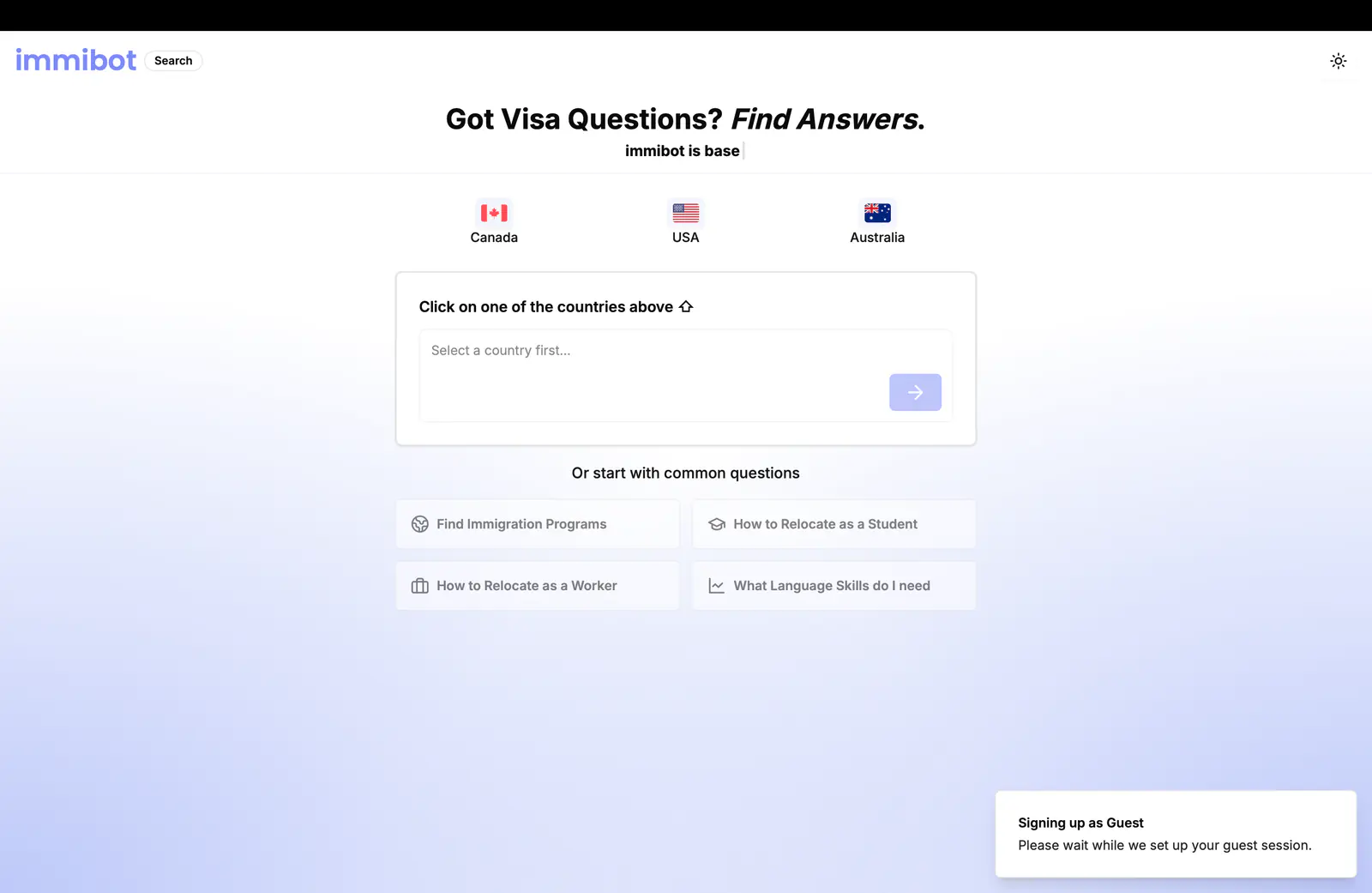
Keeping answers and context together.
Immigration questions are high-context. A useful answer depends on country, intent, profile details, documents, and changing source material. The product challenge was to make that complexity feel like a sequence of clear next steps.
I owned the product layers around two generations of Immibot: the original Flowise Advisor/Search, tracking, orientation, and Federal Skilled Worker (FSW) workflows, and the later Perplexity-powered official-source search experience with persisted citations and guest-to-account continuity.
The system provides guidance and workflow software, not legal advice or a guarantee of eligibility.
The current product path.
From first question to an inspectable, saved answer.
- 01low-friction start
Guest entry
A visitor could start in one click. The guest session gave the workflow enough continuity to be useful before account creation.
- 02Canada · USA · Australia
Country selection
The selected destination configures the prompt and the official government domains allowed for research.
- 03evidence beside answer
Official-source search
Perplexity Sonar researches restricted government sources and returns inspectable links with the answer.
- 04responsive and durable
Stream + persist
The response reaches the UI incrementally while messages and numbered citations are stored through Prisma.
- 05continuity after signup
History + account continuity
Persisted history moved from the guest session into the Clerk account so users did not have to restart the workflow after signup.
Advisor/Search selection → Flowise chatflow → follow-ups and progress tracking → orientation/FSW tools → persisted recommendation
The earlier version used Flowise for follow-up questions, progress tracking, and eligibility tools. Search later moved to Perplexity.
Migrating from Flowise to Perplexity.
Search moved to Perplexity while sessions, accounts, and conversation storage remained part of the app.
Why this mattered. The 2024 Flowise system used distinct Advisor, Search, follow-up, tracking, orientation, and FSW paths. The current system uses Perplexity Sonar for country-aware official-source research while retaining the surrounding session, persistence, account, and product layers.
What I built
I built chat APIs, streaming UI, guest and authenticated sessions, Prisma persistence, administration, Clerk auth, document uploads, product analytics, payment credits, and deployment.
Stack: Next.js / TypeScript · AI search / Flowise workflows · Prisma / PostgreSQL · Clerk / Stripe credits · PostHog · Azure Blob / Vercel
The product around the model.
Alongside search, I worked on identity, administration, documents, consultation hand-offs, credits, and instrumentation.
Guest entry and account continuity made the workflow usable before and after signup.
Product outcome · context carried forwardKeep the conversation after signup.
A guest could ask questions, return to saved history, and create an account without losing earlier conversations or citations.
I instrumented chat, response, feedback, consultation CTA, document, and application events through PostHog while preserving conversation continuity across guest and authenticated sessions.